An MSU Physician on the Front Lines of Human Trafficking
- Jodi Flanders, D.O.
- Associate Professor, Department of Family and Community Medicine
- Associate Medical Director, Global Health Institute
- College of Osteopathic Medicine
Project Overview
- Jodi Flanders supports survivors of human trafficking through outreach and medical care with her students.
Products/Outcomes
- Medical protocols for a safe home for survivors of human trafficking, and service as a resource for its staff and residents.
- Talks with survivors at hospitals, continuing medical education conferences, international universities, churches, and community centers.
- Resources and prevention education for young and adolescent girls in Iquitos, Peru.
Partners
- Days for Girls International
- Sanctum House, Southeast Michigan
- Thistle Farms, Nashville, Tennessee
Form(s) of Engagement
- Community-Engaged Service and Practice
- Community-Engaged Teaching and Learning
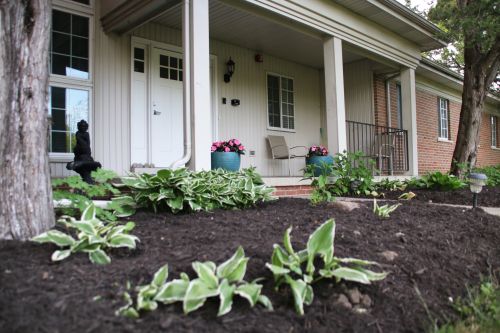
Sanctum House serves as a sanctuary for survivors of human trafficking.
Jodi Flanders, an MSU faculty member and a family physician, has devoted much of her career to serving marginalized people—through her work in global health and with survivors of human trafficking.
She has visited upscale bars in Chicago, provided care for women sheltering under bridges in metro Detroit, and led prevention efforts with young girls in remote villages in Peru where human trafficking is prevalent.
In her roles as associate medical director of MSU’s Global Health Institute and associate professor of family and community medicine in the College of Osteopathic Medicine, she teaches and mentors medical students during their international family medicine rotations.
Closer to home, Flanders volunteers as medical director of Sanctum House, a residential facility in Southeast Michigan for women who have been trafficked.
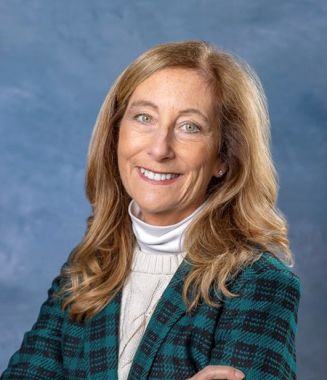
Jodi Flanders, D.O.
A Pivotal Encounter
After graduating from MSU, Flanders practiced family medicine and obstetrics for 30-plus years in Owosso, Michigan, joining global medical missions as she was able. She was preparing to leave her practice to do global health full time when she visited her daughter in Chicago.
During that 2012 visit, Flanders attended an Episcopal church that opened her eyes to the realities of human trafficking. After the service, the priest invited congregants to stay and listen to the stories of invited guests, survivors of human trafficking.
“When I listened to them, it had a magnetic effect on me,” Flanders recalled. She lingered afterward and chatted with the women. They shared their experiences at Thistle Farms, a residential facility in Nashville, Tennessee, that offers housing, health care, counseling, job training, and employment to women survivors. On that fateful Sunday, “my life changed,” Flanders recalled.
Flanders reviewed the organization’s annual report. Wanting to learn more, she visited Nashville to engage with the women and medical staff there. She would visit for 2 or 3 weeks at a time throughout the year.
Meanwhile, awareness of human trafficking was growing. In Michigan, Flanders met Edee Franklin, who in 2013 spearheaded an effort to open a residential facility in Michigan similar to Thistle Farms that would become Sanctum House.
At that time, there were only 20 beds for women survivors of human trafficking in the state. A former heroin addict, Franklin traced her recovery to time in a residential facility. “I’d been on the streets, and I related to these women,” she recalls. “So I decided to create a 2-year program for adult women survivors of human trafficking.”
Serving as Medical Director
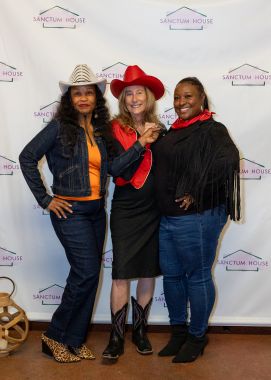
Dr. Jodi Flanders joins Sanctum House staff at a Western-themed fundraiser.
Franklin gathered a team to implement her vision, diving into research and fundraising. She connected with Flanders in 2016 through their joint work on the Michigan Human Trafficking Task Force.
“She was just a delight,” recalled Franklin, who had been seeking a medical director. Flanders joined the effort, writing medical protocols for the facility.
Sanctum House opened in 2018. The facility, which houses 12 women for up to 2 years, provides survivors of human trafficking with physical and mental health care, social skills, education, and practical skills like budgeting and cooking. “The mission is to give them the life skills to achieve a sustainable and healthy lifestyle,” Franklin said. “We don’t fix or save anybody. We give them the tools to save themselves.”
Many women who have been trafficked grapple with drug and alcohol addiction, compounded by the trauma they experienced. Flanders lent her expertise on which medications could be allowed into the facility, recommending alternatives in cases where a medication might be habit-forming.
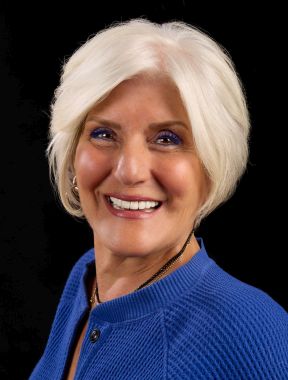
Edee Franklin
“And she has such a big heart,” said Franklin, who is no longer involved in the day to day at Sanctum House but continues to mentor women. “Going to all these countries and doing her medical outreach was very beneficial to us, because she knew so much about trauma and women.”
Meeting Survivors Where They Are
For Flanders, Sanctum House’s approach to survivors of human trafficking mirrored her personal mindset. “Number 1, that we can’t fix anyone,” she said. “We have to meet the person where they are. And that may be a very long ways from where I want them to be.”
It is also important to acknowledge the high prevalence of substance use among women who have experienced trafficking. Flanders observes that historically there was a belief that emotional support alone could protect survivors from being re-trafficked. In cases of active substance use disorder, trafficking can function as a mechanism to support the addiction, said Flanders. “Effective intervention requires simultaneous treatment of the substance use disorder.”
Working with women at Sanctum House led Flanders to obtain additional education in addiction medicine. As medical director, she is on call whenever a question about medication comes up.
In addition to her work at Sanctum House, Flanders has joined survivors in speaking about trafficking. She has spoken at hospitals, police departments, churches, community centers, and universities about how to recognize human trafficking and intervene.
From U.S. Cities to Peru
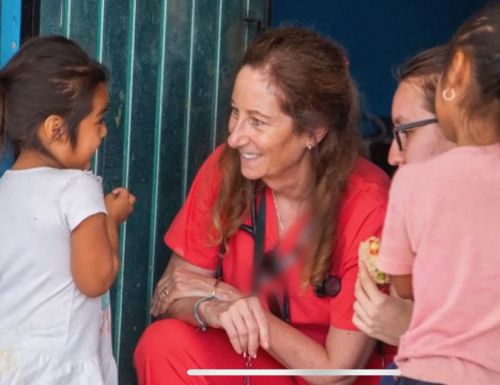
Dr. Jodi Flanders connects with children in Iquitos, Peru.
Flanders has visited high-end establishments in Chicago, New York, and Detroit, where she said sexual exploitation is “hidden in plain sight.” She is a quiet presence, offering support in a way that does not jeopardize their safety.
Her outreach has spilled into her global health work. At MSU, Flanders accompanies medical students on annual trips to Iquitos, Peru. The city has a high rate of human trafficking. “It’s girls—little girls,” Flanders said. “It’s a well-known, not uncommon form of income.”
Given how entrenched the practice is, Flanders has shifted her focus to prevention. She speaks with younger girls ages 6 or 7, reminding them, “They are the queen of the castle. They decide who has access to them.”
Flanders and her students work with the nonprofit Days for Girls, an organization devoted to removing the stigma and limitations around menstruation. When they travel to Iquitos, they bring backpacks filled with reusable pads and underwear. Flanders’ female students educate the girls about how to use them.
About Human Trafficking
Human trafficking occurs when a trafficker uses force, fraud, or coercion to control another person for the purpose of engaging in commercial sex acts or soliciting labor or services against his/her will. Force, fraud, or coercion need not be present if the individual engaging in commercial sex is under 18 years of age.
It is known that statistics in human trafficking recording are often inaccurate nationwide due to underreporting. In 2024, the National Human Trafficking Hotline identified 340 cases of human trafficking in Michigan involving 585 victims.
According to a message from the Attorney General in the Michigan Human Trafficking Commission’s 2024 annual report, the actual numbers of those trafficked is likely five times greater, confirming “the stark reality that human trafficking is happening within our borders and is affecting thousands of Michigan residents directly and even more indirectly.”
The Michigan Human Trafficking Commission, created in 2014 within the Department of the Attorney General, offers a wealth of information and resources about trafficking in Michigan.
“Then I pull the little girls aside as well as the teens and I give my very short pep talk about their value,” Flanders said. “The mothers stay. And the mothers are smiling and crying. It’s very moving.”
In preparing her students for travel to Peru, Flanders addresses the realities of human trafficking—not just abroad but in the United States. “They are there 1 to 2 weeks and then they are coming back to practice medicine in the USA,” she said. “They need to come back and recognize what’s going on in their own country.”
For Flanders, her global work and her advocacy for survivors of human trafficking in the United States are interrelated. “It’s different corners of the margins if you will,” she said. When she is not traveling, she can focus on her work with Sanctum House or advocacy and prevention education.
Surviving and Thriving
Flanders’ presence and commitment have made an impact.
Paige, a former addict and survivor of human trafficking, was among the first residents at Sanctum House. Entering her ninth year in recovery, she now runs a successful home health care business.
“Dr. Jodi was a huge, huge part of my recovery,” recalls Paige. “She was a positive role model for me.” Flanders would always have time to “lend an ear,” offering advice or just listening. The two remain in touch and have done speaking engagements together.
Flanders’ knowledge about human trafficking, trauma, and addiction provided a lifeline to residents, said Paige, who served on the board of Sanctum House.
Her mentorship, and that of Edee Franklin, have made all the difference, Paige said. “I always tell people: ‘It’s the people who you surround yourself with that make you who you are, people like Dr. Jodi. These are the strong, strong women who have made me who I am today.’”
The impact goes both ways, Flanders said. What has been most rewarding about her work, she said, “is the phenomenal women that I have met and that I am still in touch with as they continue to succeed and soar.”
- Written by Patricia Mish, University Outreach and Engagement
- Photographs courtesy of Jodi Flanders and Edee Franklin