Working With Communities to Address Energy Insecurity in Rural Alaska
- Kristen Cetin, Ph.D.
- Red Cedar Distinguished Professor, Department of Civil and Environmental Engineering
- College of Engineering
- Bora Cetin, Ph.D.
- Red Cedar Distinguished Professor, Department of Civil and Environmental Engineering
- College of Engineering
Project Overview
- Kristen and Bora Cetin are working with rural communities in Alaska to alleviate energy insecurity in the region by identifying culturally appropriate ways to adapt housing to improve efficiency.
Products/Outcomes
- Energy audits of homes that measure efficiency, indoor air quality and mold issues, and foundation settlement.
- Annual community summaries with detailed data on physical housing characteristics, energy efficiency, mold, and indoor air quality.
- Assistance with obtaining grants for community priorities such as training residents to do energy audits, equipment, and materials.
Community Partners
- Kari Mejorado, Housing Director, Native Village of Unalakleet
Form(s) of Engagement
- Community-Engaged Research
- Community-Engaged Service
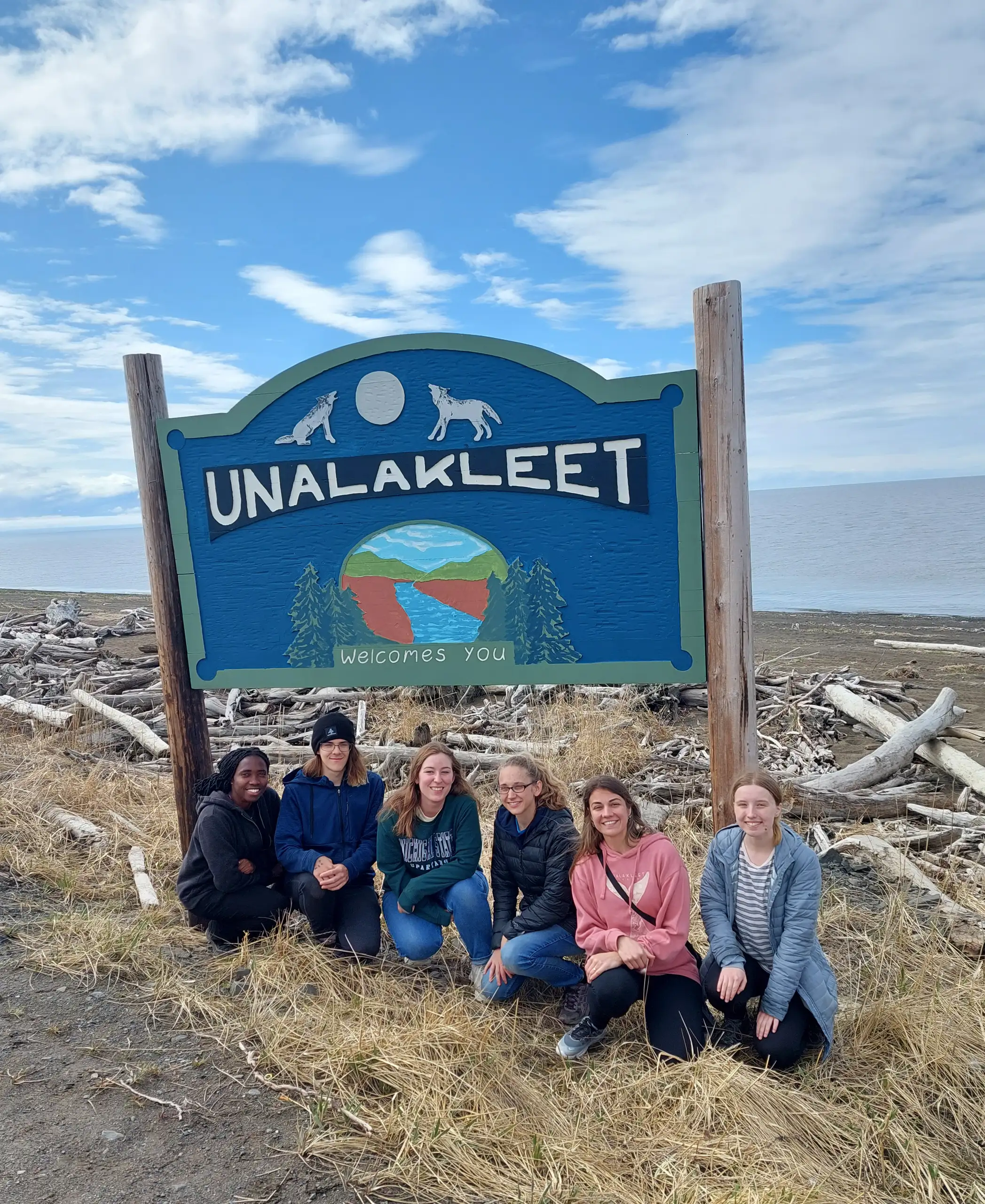
Kristen Cetin (third from right) is pictured with students Amanda Quarshie, Zach Gioppo, Christiana Kiesling, Patricia Guillante, and Janie Cooper during a visit to the Native Village of Unalakleet.
For most Americans, going “off the grid” means taking a break from social media, hitting pause on Netflix, or perhaps just powering down our smartphones.
It has an entirely different meaning in remote Arctic Alaskan villages, where many residents don’t have access to the main electric grid in the first place.
“This was a big surprise for us,” said Kristen Cetin, a professor with the College of Engineering, who with her husband and colleague Bora Cetin has been traveling to Alaska for the past 6 years to work with Native communities on housing, energy, and water-quality issues.
“If you think about the continental United States, everyone is connected, with very few exceptions, to the electrical grid. Everyone has road access to where they live,” Cetin said. “In many places in Alaska, there is no road access nor is there an electric grid to connect to.”
Consequently, residents rely on large diesel generators used by the community to generate power. With no access to natural gas, heating oil is shipped in on barges. These factors, along with extreme weather conditions, result in high costs and energy insecurity in the region.
“The people that we have worked with work hard to pay their utility bills, they make it work, but it’s a bigger burden than what we’re used to,” Cetin continued. For example, an average U.S. household devotes about 3% of income to heat and electricity; that figure is closer to 10% in rural Alaska. A gallon of milk runs $10 to $12 per gallon and a case of bottled water, over $40.
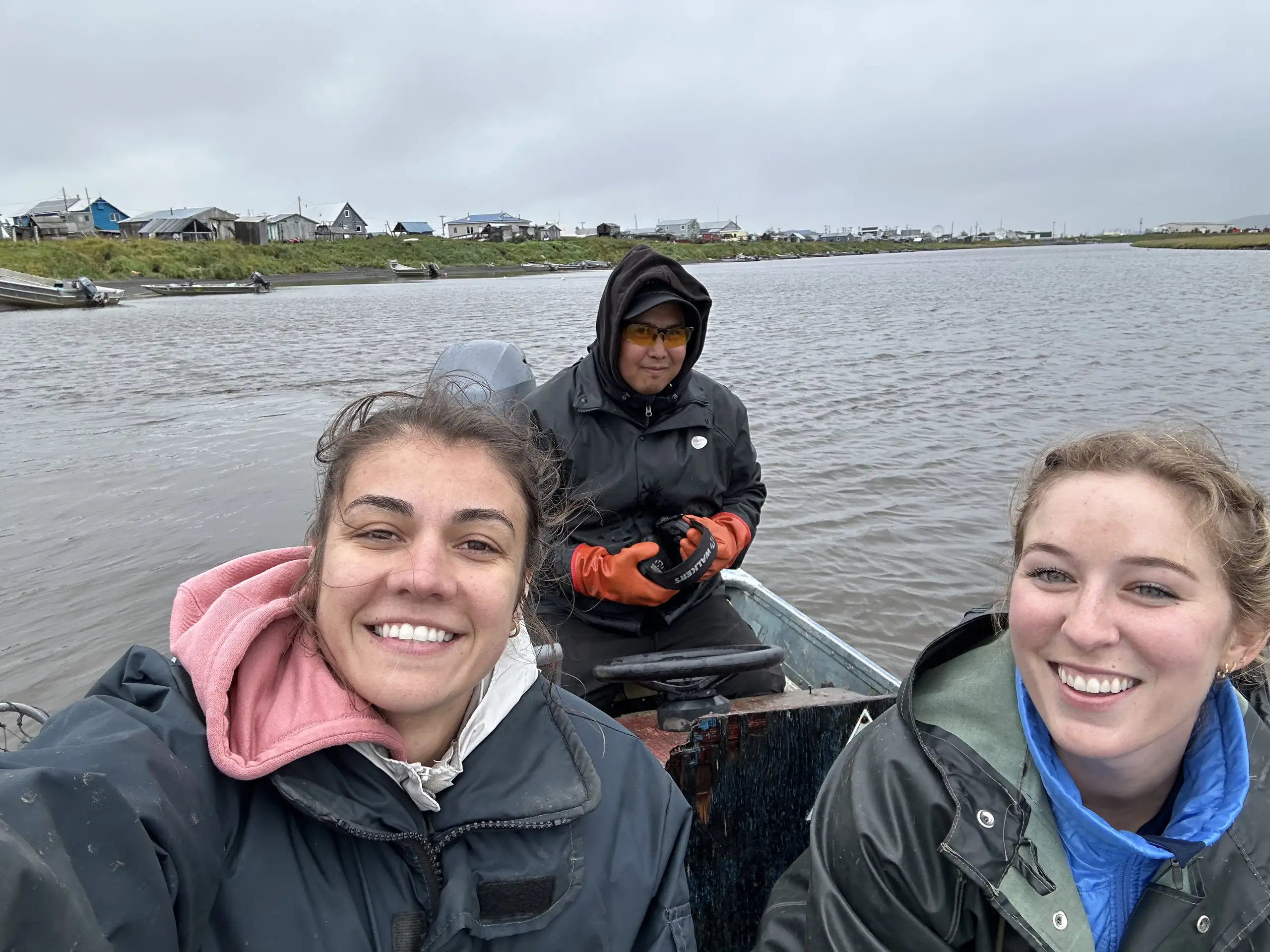
Fishing is an important part of the local culture in the coastal Native Village of Unalakleet. A local resident is joined by MSU students Christiana Kiesling and Patricia Guillante, who are part of Kristen Cetin’s research team.
In response to these realities and the community concerns identified during a pilot study funded by the National Science Foundation (NSF), the Cetins, both with the Department of Civil and Environmental Engineering, are co-principal investigators on an NSF-funded, $3 million multiyear study entitled “Collaborative Research: Responding to Energy Insecurity in Arctic Housing Using a Community-Based Participatory Research Approach.”
Kristen Cetin’s research seeks to identify better, more culturally appropriate ways to adapt rural Alaskan housing to alleviate energy burden. In a separate initiative, Bora Cetin is working with Alaska Native communities to co-develop climate-resilient water supply systems and assess Arctic soil conditions and their effects on pipeline structural integrity. “Among our expertise as a team and what the community members and stakeholders were telling us, these two efforts seemed to be good fits,” Kristen Cetin said.
‘A Different Country’
This past summer the Cetins and their research team traveled twice to Nome, Alaska, and once to the Native Village of Unalakleet, a remote coastal community along Norton Sound on the Bering Sea, a journey that involves crossing five time zones over the course of three flights. Nome has a population of approximately 3,000, while Unalakleet has 600 to 700 residents.
“It has been quite an adventure since we started to learn the nuances of the area,” said Kristen Cetin. “I would equate it to going to a different country.”
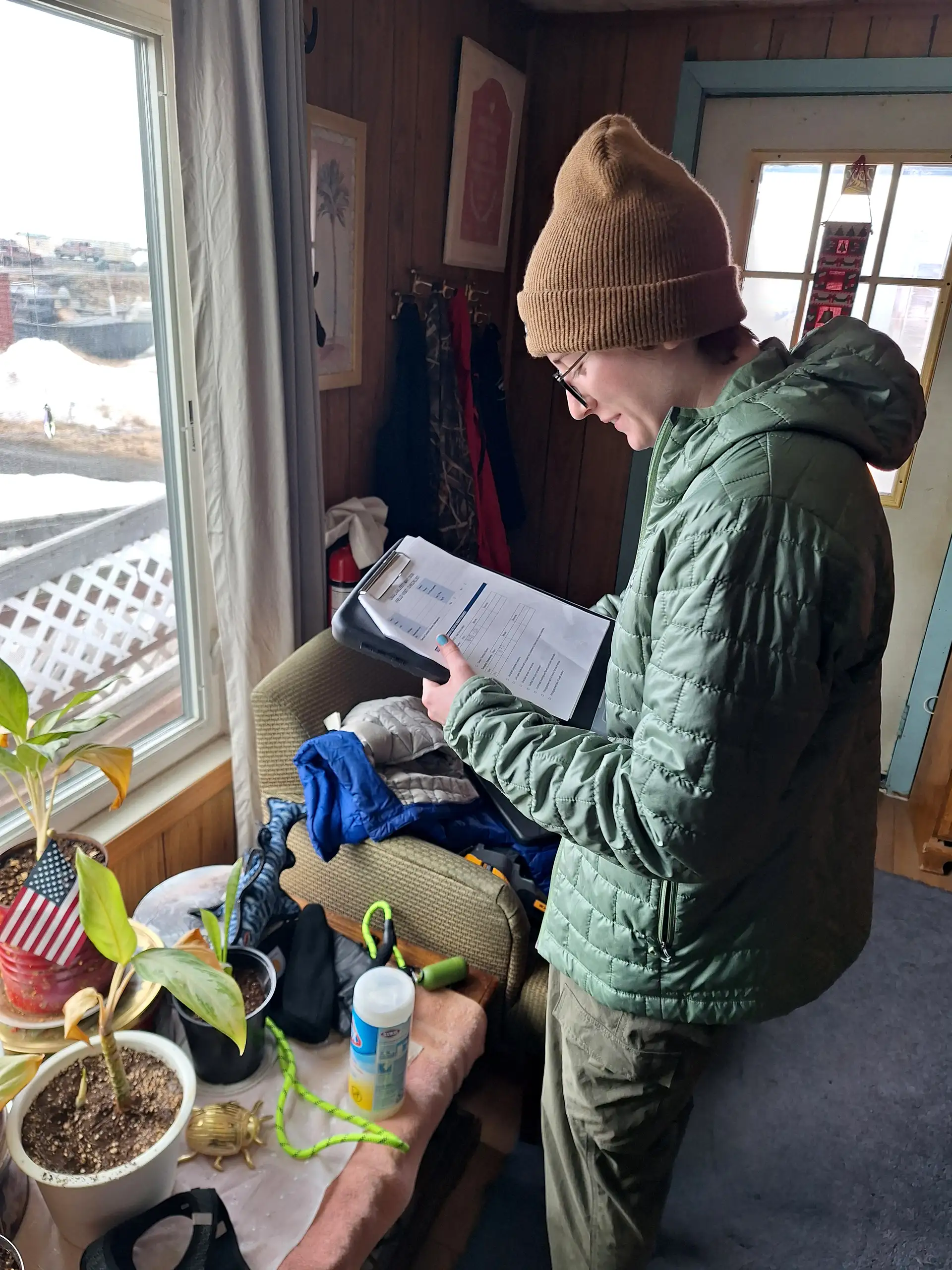
MSU graduate student Kylie Camman conducts an energy audit in Unalakleet, Alaska.
That’s especially true in Unalakleet, where 80 to 90% of the population are Alaska Natives and most residents know one another. “It’s a wonderful group of people to work with,” said Cetin. “It’s not really different than entering any community that doesn’t know who you are. You always need to respect their community and their needs and wants.”
Much of the lifestyle and culture of the community revolves around fishing, berry picking, and hunting—shared activities passed down to each generation. “We don’t ever want to interrupt that. We want to respect it and respect the community,” she said.
When planning trips, the Cetins work around these seasons. They also avoid the annual Iditarod Sled Dog Race in March, which includes stops in Nome and Unalakleet. They try not to plan community meetings on sunny days, knowing people will be outdoors.
They also have had to adapt their mindset as deadline-driven researchers to the slower pace of life in rural Alaska. While the Cetins may plan a trip months in advance, “we have little idea what we’re going to do when we get there because people there don’t operate that way,” Kristen Cetin said.
Respect for the community also informs the way the Cetins conduct their research. With the influx of NSF grants, some researchers came to Alaska, extracted information, then left. Establishing trust involves ensuring that the community benefits from the work and has a say in it, the Cetins said.
What Energy Insecurity Looks Like
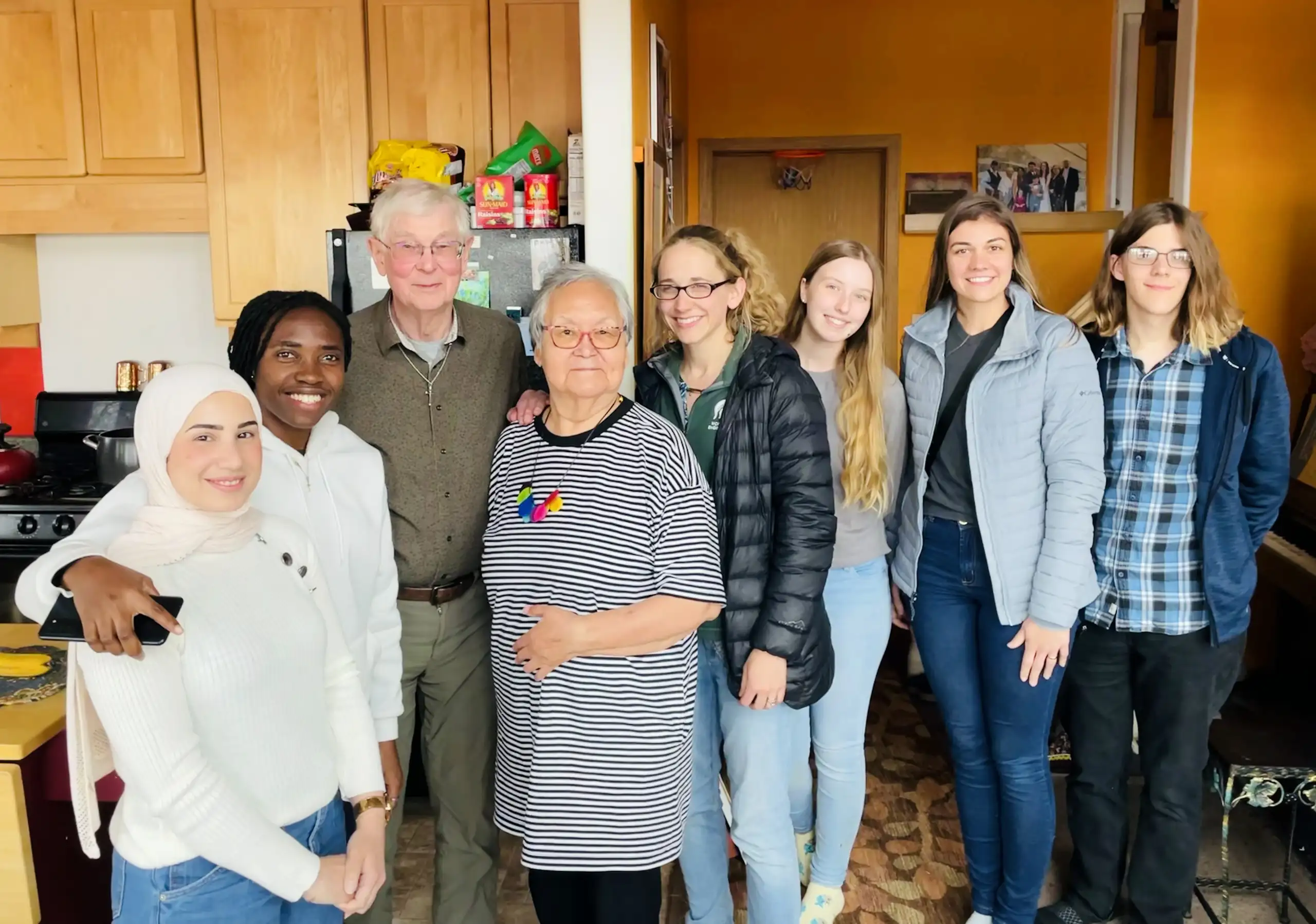
Kristen Cetin, fifth from left, and the MSU research team meet with local residents during a visit to Unalakleet, Alaska.
For Kristen Cetin, much of her work with the community has centered on housing and energy needs. Those needs are vast and variable, according to Kari Mejorado, housing director of the Native Village of Unalakleet.
“It’s pretty much everything you can think of,” Mejorado said. “People’s plumbing and heating systems are constantly breaking; some families will live for months, or even years, without running water and only a woodstove for heat because they can’t afford a repair.”
While some homes are well insulated, others are inefficient and need significant weatherization work, she said. Through energy audits, the MSU team also has identified air quality concerns in many homes, air leakage around windows and doors, and shifts in homes’ foundations due to “frost heaves” when the ground thaws and refreezes, Mejorado observed.
During a typical visit, Kristen Cetin and her research team talk with homeowners and conduct energy audits to measure energy efficiency, indoor air quality and mold issues, and foundation settlement. Her team recently checked on the efficacy of previous repairs.
In a separate but related effort, Bora Cetin, a geotechnical engineer, is researching shifts in foundations and pipe bursts related to permafrost changes. In the past, the permafrost layer—ground made up of rock, soil, sediment, and organic material—would remain frozen. However, climate change has caused that layer to thaw, then refreeze, which causes the ground to “heave,” or move upward. Once warm weather returns, the ground settles.
“The eastern half of Nome is sinking for the most part,” Bora Cetin said. “In many cases, they have to level their foundations several times a year, and it’s very expensive.” The instability also causes underground pipes to burst, threatening the water supply.
The shifts affect home structures as well. “[Residents] are not able to close their doors or windows. That means in the wintertime you need to burn more gas and oil to keep the house warm. So indirectly that soil movement impacts energy efficiency,” he said.
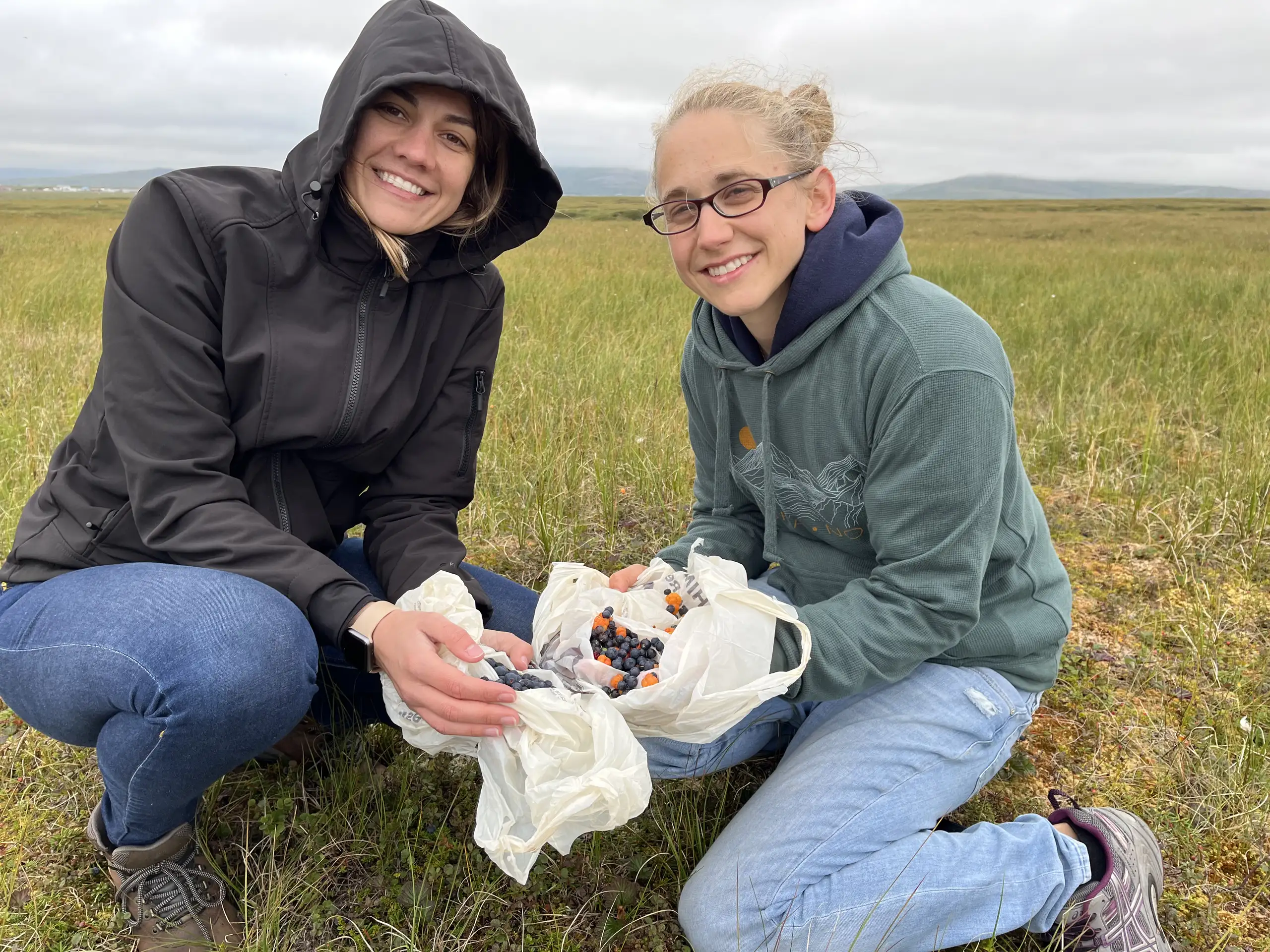
Berry picking, along with hunting and fishing, is a vital part of the local culture among Native Alaskans. Here, Kristen Cetin (right) is pictured with Ph.D. student Patricia Guillante.
Not only are repairs costly, but the logistics of getting building supplies to Nome and Unalakleet present a whole new set of challenges, Kristen Cetin said.
Say a home needs insulation, for example. A resident can’t just run to Home Depot. “You need to figure out how to get it shipped from Seattle on a barge up to Nome,” she said. Then a second, smaller barge would be needed to transport it from Nome to Unalakleet. Add a winter storm and it could take months to arrive.
Workforce capacity presents another hurdle. When a pipe bursts or a furnace stops working, it’s not as simple as making a phone call. There are no electricians or plumbers in Unalakleet. Instead, the community hires tradespeople to fly in for a week or two and make electrical and plumbing repairs. In the meantime, residents cope the best they can.
A Community-Driven Response
While there is no “silver bullet,” MSU researchers and community leaders are working together to address these challenges, Cetin said. Regular conversations with community leaders help shape priorities and next steps.
Weatherization has been a high community priority, for example. Through a partnership secured by MSU between the Native Village of Unalakleet, Dow Foundation, and Dap Products, NVU completed 10 “substantial weatherization and modernization products,” Mejorado said.
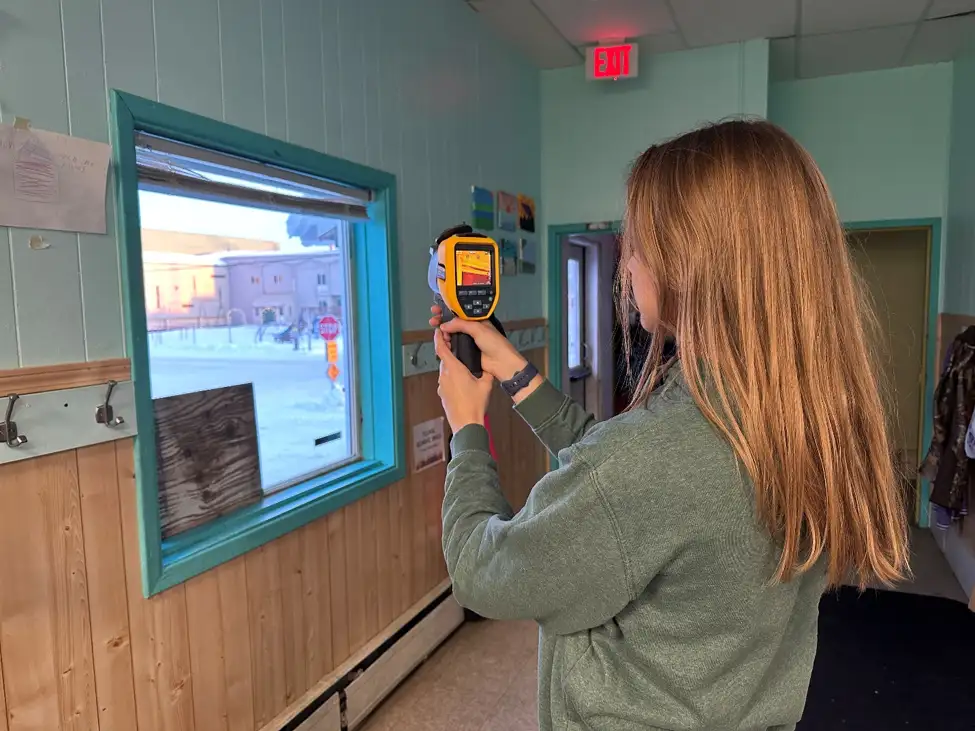
MSU graduate student Christiana Kiesling uses a handheld thermal imaging camera to check for leaks and thermal bridging around a window during an energy audit.
The MSU team also shares its findings, including a summary of housing and energy needs, with community leaders to support grant applications. “Every time I apply for a grant, I find myself reaching for data points from the research MSU has done,” Mejorado said.
The data also informs local decision-making. After MSU research identified a need to improve indoor air quality, Mejorado said she is looking at investing in better air quality evaluation equipment for housing assessments. Additionally, MSU researchers have worked with residents in Unalakleet and Nome on how to conduct energy audits and use grant funding to purchase equipment and train local workers to make needed repairs.
As the project nears its planned 2027 conclusion, seeing tangible results has been rewarding, Kristen Cetin said. In other research projects, the impacts can be difficult to see. “To me, it’s exciting to see that something is coming out of this that is benefiting people," she said.
The research team has appreciated working with communities toward shared solutions, and it is encouraging to see residents and leaders continue the work, Cetin said. “The ultimate goal,” she said, “is that they’re on a pathway forward without us. They don’t need us anymore.”
- Written by Patricia Mish, University Outreach and Engagement
- Photos courtesy of Kristen Cetin